Pasture & silvopasture
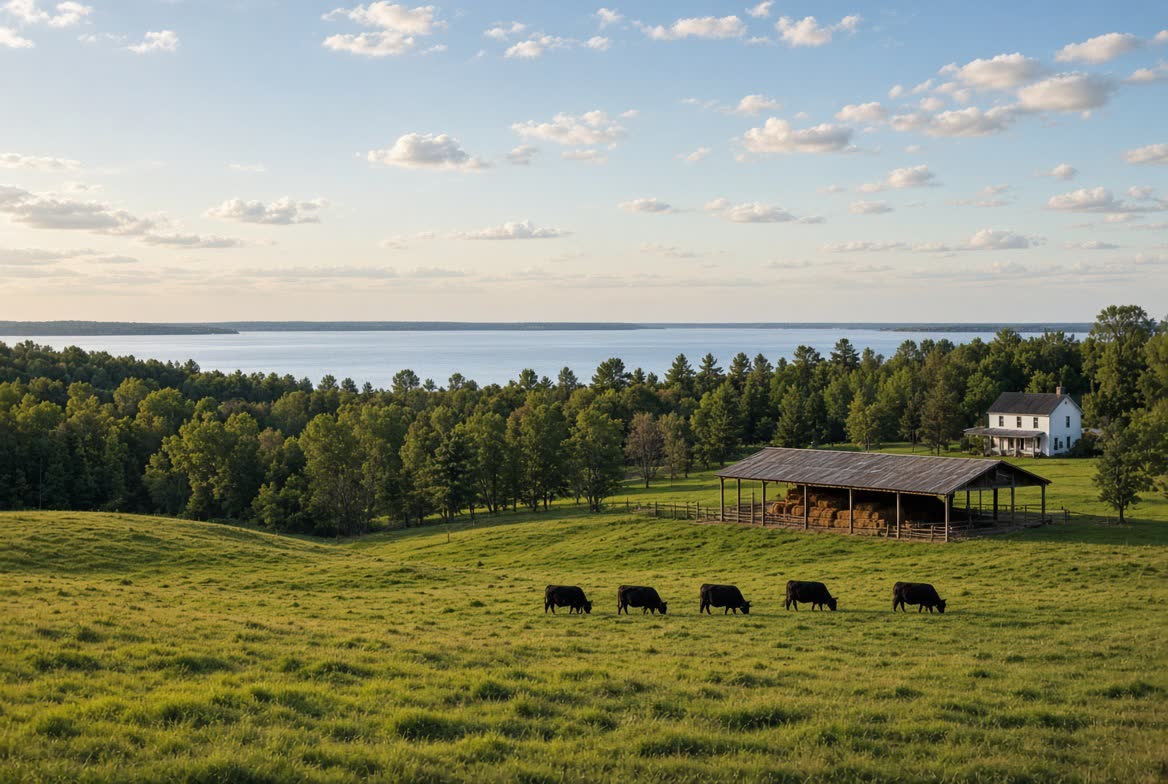
Cattle live on mixed grasses and farm-grown hay, then range into wooded lots. Trees give shade on hot days and a windbreak in winter. That mix of forage and canopy is silvopasture.
Since 1983
One mile from Lake Ontario, in the Town of Carlton, Orleans County. Pasture, woods, ponds, and a creek that runs toward the lake.
Robert’s family farm was sold before he was grown. He still wanted the work. At 26 he bought his first 30 acres. He and CindyLou Lee produced enough for themselves first. The herd, the acres, and the customers came after.
They began with Black Angus, then brought in a Hereford bull. The cross settled the herd: calmer cattle, better keepers, and beef that keeps the Angus marbling and flavor. Every calf is born and raised here.
“Food has been violated in ways that will have serious consequences for the environment, soil and human health. The best food hasn’t been modified in any way — sprayed with herbicides or genetically modified — and we wanted that for our family.” Robert VanWuyckhuyse, in the farm’s A Greener World profile
How the place works
Cattle live on mixed grasses and farm-grown hay, then range into wooded lots. Trees give shade on hot days and a windbreak in winter. That mix of forage and canopy is silvopasture.
In 2016 they built an open-sided covered feedlot so the herd can eat out of rain and snow. Manure is contained there on purpose, to keep it out of the Oak Orchard watershed. They work with the county Soil & Water District.
A renewable system now powers the farm and house. Less draw on the grid, a smaller footprint for the next people on this ground. Bob will talk your ear off about how affordable it got.
Certified Naturally Grown livestock since June 14, 2010, with regular peer inspections, most recently in July 2026 by Orleans County Soil & Water staff. Animal Welfare Approved by A Greener World. Certified by the American Grassfed Association. Members of New York Farm Bureau and the New York Beef Producers Association, and long involved with NOFA-NY.
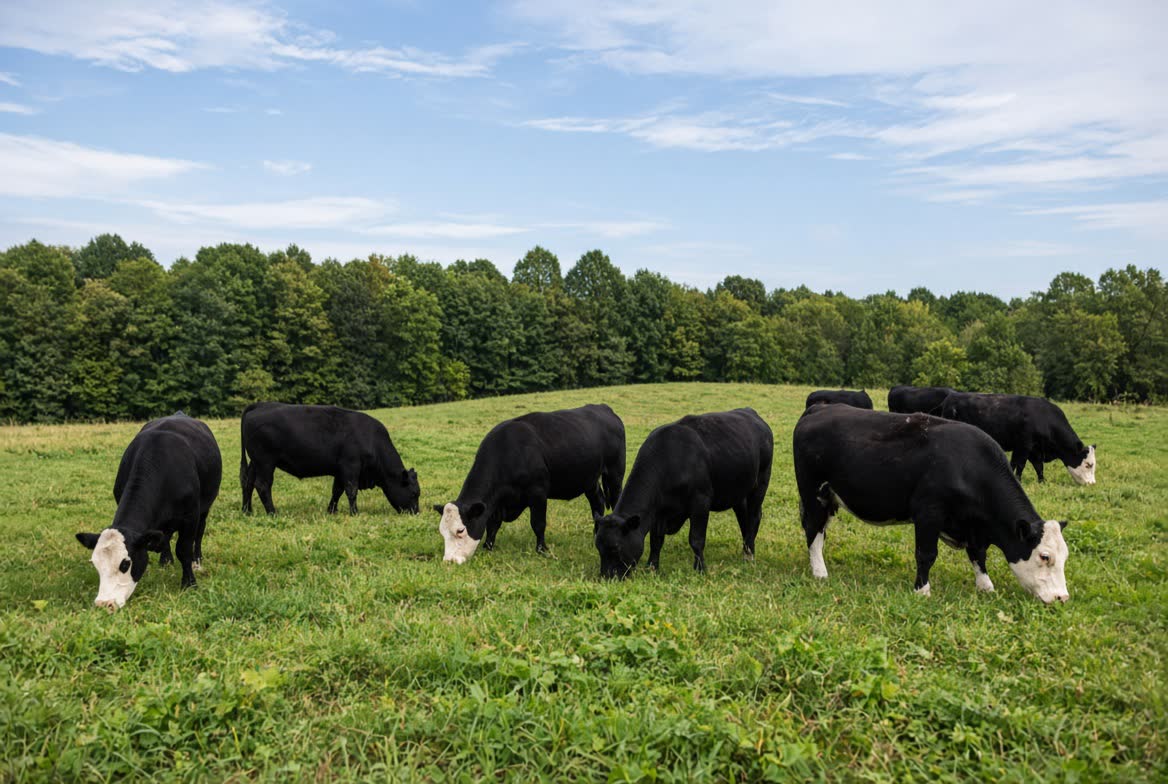
SUNY Brockport’s Food and Culture class visits several times a year. They walk the pastures, look at the animals, and hear what chemical-free farming actually looks like on a working farm, not in a brochure.
Grandson Justin helped bring the laying flock onto the farm in the fall of 2012. Heritage breeds, on grass, the way hens are supposed to live.
This is still a small family farm. There is no gift shop and no weekend festival. If you come, call first.